Summary
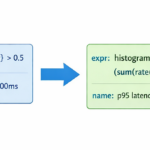
Airbnb successfully migrated from a third-party, vendor-managed observability platform to a custom, in-house solution built on open-source Prometheus, overhauling their metrics infrastructure across instrumentation, collection, storage, and visualization. This complex, five-year journey involved migrating 1,000 services, 300 million timeseries, 3,100 dashboards, and over 300,000 alerts, driven by rising vendor costs and a desire for greater control and improved developer experience. The article details their evolution from an initial, flawed migration strategy to a more successful approach that prioritized achievable targets, translated the intent of queries, embraced a new query language with AI assistance, and leveraged the migration as an opportunity to correct outdated patterns and introduce a superior alerting framework.
Why It Matters
A technical IT operations leader should read this article because it offers invaluable insights into the strategic and practical challenges of large-scale observability platform migrations. It highlights the critical shift from vendor dependence to in-house ownership, demonstrating how this can lead to significant cost savings, superior tooling, consistent data, and a fundamentally improved developer experience. The article's detailed account of both flawed and successful migration strategies, including the importance of translating query intent, leveraging AI for new query languages, and seizing the opportunity to modernize outdated patterns, provides a practical blueprint for leaders considering similar transformations. Furthermore, the emphasis on owning the interaction layer (frontend, authoring tools, workflows) as a key to future-proofing observability systems offers a crucial takeaway for long-term strategic planning, even for teams not currently facing a migration.